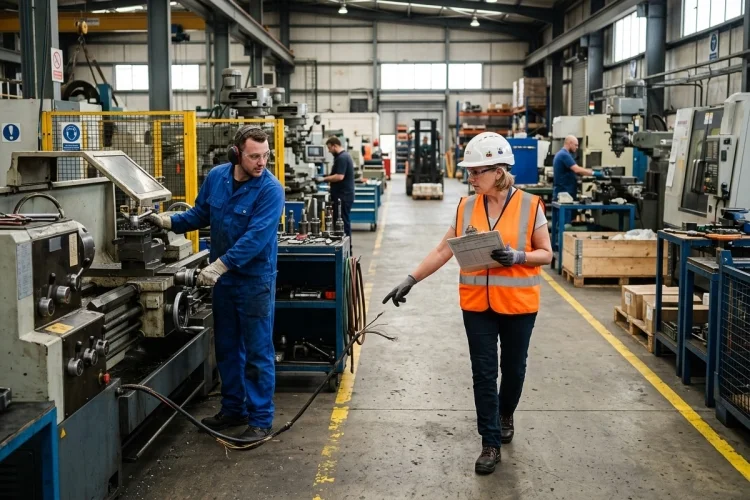
A workplace can look perfectly normal while hiding dozens of potential problems. A damaged cable may be tucked under a desk, a machine guard may have become loose, or workers may be using an awkward lifting method simply because “that is how it has always been done.”
These small issues can eventually lead to injuries, illnesses, equipment damage, or operational delays.
The International Labour Organization estimates that 2.93 million workers die each year because of work-related factors, while around 395 million experience non-fatal occupational injuries.
Learning how to conduct a workplace hazard inspection helps organisations find unsafe conditions before someone gets hurt.
A proper inspection is not just a quick walk around the building with a generic checklist. It involves preparation, observation, conversations with workers, accurate documentation, risk prioritisation, and follow-up.
This guide explains each stage in simple terms, whether you are inspecting an office, shop, warehouse, workshop, construction area, or small manufacturing facility.
What Is a Workplace Hazard Inspection?
A workplace hazard inspection is a planned examination of work areas, equipment, materials, processes, and working practices. Its purpose is to identify existing or potential dangers and decide what action is needed to control them.
Inspections may reveal immediate safety problems, such as blocked emergency exits, damaged ladders, slippery floors, or exposed wiring.
They can also uncover less visible health hazards, including chemical vapours, excessive noise, repetitive movement, poor ventilation, and workplace stress.
OSHA recommends conducting both initial and periodic inspections because hazards can develop as equipment wears out, workstations change, maintenance is delayed, or housekeeping standards decline.
An inspection is different from an incident investigation. An inspection looks proactively for problems, while an investigation normally takes place after an injury, near miss, equipment failure, or other event. Both processes should support the same goal: preventing future harm.
Prepare Before the Inspection Begins
Good inspections begin before anyone enters the work area. Start by defining the scope. Decide whether the inspection will cover the whole workplace, one department, a specific process, or a high-risk activity.
Review existing information to understand where problems may already exist.
Useful records include previous inspection reports, incident and near-miss reports, maintenance logs, worker complaints, equipment manuals, Safety Data Sheets, exposure-monitoring results, and job hazard analyses.
Look for repeated findings. If damaged electrical cables, poor housekeeping, or lifting problems appear in several previous reports, the issue may point to a wider management or maintenance weakness rather than one isolated mistake.
Choose an appropriate time to observe normal work. Inspecting an empty warehouse may reveal storage problems, but it will not show how forklifts and pedestrians interact during a busy shift.
Build the Right Inspection Team
A workplace inspection should include people who understand both safety principles and everyday operations.
Depending on the organisation, the team may include a supervisor, safety representative, maintenance employee, worker representative, or health and safety committee member.
Worker participation is especially valuable. Employees often know which machine regularly jams, where leaks normally appear, which procedure is difficult to follow, or when production pressure encourages unsafe shortcuts.
OSHA specifically recommends involving workers in inspection teams and speaking with them about the hazards they observe or report.
Inspectors should also understand their own safety responsibilities. They may need site induction, suitable footwear, eye protection, hearing protection, or other personal protective equipment before entering certain areas.
No inspector should operate unfamiliar equipment simply to test it. Ask a trained operator to demonstrate the normal process while the inspection team observes from a safe position.
Use a Workplace-Specific Inspection Checklist
A checklist creates structure and reduces the chance of overlooking common problems. However, a generic form should not become a substitute for careful thinking.
The best checklist reflects the actual workplace. An office inspection might focus on electrical equipment, workstation ergonomics, fire exits, storage, lighting, and indoor air quality.
A warehouse checklist would also cover forklifts, loading areas, racking, manual handling, pedestrian routes, and falling objects.
Common areas to examine include:
- Housekeeping, walkways, floors, stairs, and exits
- Machinery, tools, vehicles, and electrical equipment
- Chemical storage, labels, ventilation, and spill controls
- Fire protection and emergency arrangements
- Ergonomics, lifting tasks, noise, heat, and lighting
- Workload, staffing, violence, fatigue, and other psychosocial risks
CCOHS advises organisations to develop checklists around their specific needs because no example can include every possible workplace hazard.
Leave space for unexpected findings. A checklist should guide the inspection, not prevent inspectors from noticing a danger that was not listed.
Conduct the Walkthrough Methodically
Avoid rushing through the workplace. Move through each area in a logical order and look up, down, around, behind, and inside where it is safe to do so.
1. Observe Conditions and Work Practices
Inspect both the physical condition of the workplace and the way tasks are actually performed. A machine may look safe while switched off but expose workers to moving parts, heat, dust, or noise during operation.
Look for worn components, leaks, corrosion, missing guards, overloaded shelves, damaged cables, blocked exits, poor lighting, unsafe storage, and inadequate warning signs. Observe whether workers use tools correctly and whether procedures match the reality of the job.
CCOHS recommends examining equipment in both static and operating conditions because some dangers are only visible when a process is running.
2. Talk to the People Doing the Work
Ask clear, open questions without turning the inspection into an interrogation. Useful questions include: “What usually goes wrong here?”, “Which part of this task feels unsafe?”, and “Have there been any recent near misses?”
Workers may mention discomfort, unusual smells, recurring headaches, excessive noise, aggressive customers, unrealistic workloads, or equipment problems that cannot be identified through visual observation alone.
Some hazards require specialist assessment. Airborne chemicals, radiation, noise, biological agents, and heat exposure may need monitoring equipment or professional evaluation rather than relying on sight or smell.
Document Every Hazard Clearly
A vague note such as “poor housekeeping” is not enough. The report should explain what was found, where it was found, who could be exposed, and what harm might occur.
A clearer entry would be: “Cardboard boxes are blocking half of the emergency exit beside Packing Line 2, which may delay evacuation during a fire.”
Record the date, time, department, exact location, people potentially affected, existing controls, and recommended action. Photos can provide useful evidence, but they should not expose confidential information or create additional risks.
CCOHS advises inspectors to describe each hazard and its precise location immediately, before details are forgotten.
It is also useful to note positive findings. Recognising effective controls encourages good practice and helps other departments adopt similar solutions.
Prioritise Hazards by Risk
Not every problem requires the same response time. Prioritisation helps the organisation focus first on hazards that could cause the most serious harm.
Consider how likely an incident is, how severe the outcome could be, how many people are exposed, and how often exposure occurs. A loose carpet corner may need attention, but an unguarded machine capable of causing a fatal injury requires immediate action.
Dangerous conditions should be corrected on the spot when this can be done safely. A spill may be isolated and cleaned, a damaged tool may be removed from service, or access to an unsafe area may be restricted.
When a permanent solution cannot be installed immediately, introduce temporary controls. These might include barriers, warning signs, additional supervision, reduced access, or temporary shutdowns.
OSHA recommends eliminating or controlling serious hazards immediately and using interim measures while longer-term controls are developed.
Select Effective Corrective Actions
A completed inspection report is only useful when it leads to action. Recommendations should address the underlying cause rather than simply telling workers to “be more careful.”
Use the hierarchy of controls when choosing solutions. Elimination removes the hazard, while substitution replaces it with something safer.
Engineering controls physically separate people from danger, and administrative controls change procedures, schedules, or training.
Personal protective equipment is generally the final layer. It can be essential, but it depends on correct selection, fit, maintenance, and consistent use.
For example, repeatedly reminding employees to avoid a noisy machine is weaker than enclosing it or replacing it with quieter equipment. Similarly, asking workers to lift carefully is less reliable than redesigning storage or providing mechanical lifting aids.
OSHA ranks elimination, substitution, engineering controls, administrative measures, and PPE from generally most to least effective. A combination may be necessary for complex hazards.
Assign Responsibility and Follow Up
Each corrective action should have a named responsible person and a realistic completion date. Without clear ownership, inspection findings can remain unresolved for months.
Track actions in a register that records the hazard, priority, proposed control, responsible person, target date, and final completion status. High-risk items should receive faster review than minor issues.
Follow-up must confirm that the action was actually completed and that it worked. Installing ventilation, for example, is not enough if airflow is inadequate or the system is not maintained.
Previous unresolved items should be carried into the next inspection report. Repeated findings may indicate poor accountability, inadequate resources, weak supervision, or a control that does not address the true cause.
CCOHS emphasises that inspections only serve a useful purpose when remedial action is implemented and monitored.
How Often Should Inspections Be Conducted?
There is no single inspection frequency suitable for every workplace. The schedule should reflect the level of risk, legal requirements, rate of change, equipment condition, and history of incidents.
High-risk operations may require daily or shift-based checks as well as regular formal inspections. Lower-risk offices may use less frequent scheduled reviews, supported by ongoing employee reporting.
Additional inspections should take place after significant changes, such as introducing new machinery, chemicals, processes, layouts, contractors, or working hours. They may also be necessary after an incident, emergency, or long shutdown.
The goal is not to conduct inspections simply to complete paperwork. The schedule should be frequent enough to find new or recurring hazards before they cause harm.
A workplace hazard inspection is a structured process of preparing, observing, listening, documenting, prioritising, correcting, and following up. The strongest inspections involve workers, examine real working conditions, and look beyond obvious physical dangers.
A checklist can improve consistency, but inspectors must also consider chemical, biological, ergonomic, and psychosocial hazards. Immediate dangers should be controlled at once, while every remaining action needs an owner, deadline, and verification process.
Choose one work area this week and conduct a focused inspection using these steps. Record specific findings, correct what can be fixed immediately, and track the remaining actions until they are genuinely complete.