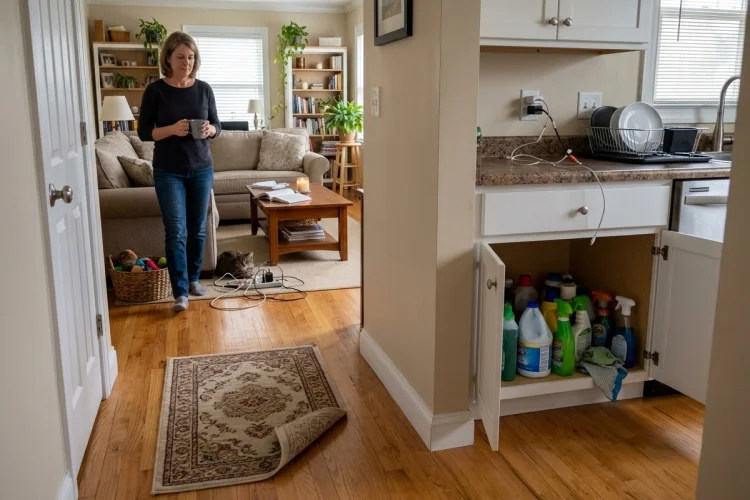
Home is supposed to be a safe place, so it is easy to stop noticing small problems around it. A rug that slides occasionally, a cracked charging cable, or a bottle of cleaner stored under the sink may become part of the background.
Unfortunately, familiar does not always mean safe. Many common household hazards are ordinary objects or conditions that become dangerous because of poor placement, damage, incorrect use, or a lack of maintenance.
Some cause immediate injuries, while others create risks that build quietly over time. The good news is that many home accidents are preventable.
You do not need to renovate the entire property or buy expensive equipment. A careful room-by-room inspection can reveal overlooked fire risks, fall hazards, poisoning dangers, electrical problems, and indoor air issues.
This guide explains the household dangers people commonly miss, why they matter, and how a few practical changes can make your living space safer for children, adults, older visitors, and pets.
Damaged Cords and Overloaded Electrical Outlets
Electrical cords are easy to ignore because they often remain hidden behind furniture or underneath desks. Over time, however, a cord can become cracked, pinched, frayed, or damaged by heat.
Running cables beneath rugs is especially risky. People may repeatedly walk over them without realising that the insulation is wearing away. Furniture placed directly on a cord can also crush or expose the internal wiring.
Extension leads and power strips create another common problem. They are useful for temporary situations but should not be treated as permanent replacements for fixed household wiring.
Connecting several high-powered appliances to one outlet may cause overheating or repeatedly trip the circuit.
The US Consumer Product Safety Commission recommends checking cords, plugs, outlets, appliances, and protective devices for possible shock or fire hazards. Warning signs include unusual heat, buzzing noises, scorch marks, flickering lights, and damaged insulation.
Stop using damaged equipment instead of wrapping the cord in ordinary tape. Electrical repairs and recurring circuit problems should be assessed by a qualified professional.
Loose Rugs, Clutter, and Poor Lighting
A small object left on the floor may not look dangerous, but it can cause a serious fall when someone is moving quickly or walking through a dark room.
Loose rugs, shoes, toys, charging cables, uneven flooring, and cluttered stairs are frequent tripping hazards. Wet bathroom and kitchen floors add the possibility of slipping, particularly when there is nothing stable nearby to hold.
The risk becomes greater for older adults, people with limited mobility, and anyone carrying children, laundry, or heavy objects. CDC data show that falls are a major cause of injury among older adults, yet many fall risks can be reduced through practical changes at home.
Secure rugs with suitable backing or remove them from busy routes. Keep stairs clear, repair damaged flooring, and place light switches where they can be reached before entering a dark area.
Nightlights can also improve visibility between bedrooms and bathrooms. In bathrooms, consider non-slip surfaces and securely installed grab bars rather than relying on towel rails for support.
Unattended Cooking and Hidden Fire Risks
Cooking is so routine that people often underestimate how quickly it can start a fire. A pan may be left for “just a minute” while someone answers the door, checks a message, or moves to another room.
The US Fire Administration identifies cooking as the leading cause of home fires and home fire injuries. Oil, food packaging, towels, wooden utensils, and curtains can all provide fuel when they are placed close to a hot cooking surface.
Portable heaters are another overlooked ignition source. They may be placed beside beds, sofas, clothing, or curtains because those are the areas people want to warm. That convenience can bring a heat source dangerously close to combustible material.
Candles, incense, overloaded plugs, faulty appliances, and smoking materials can create similar risks. Keep heat-producing items on stable surfaces and maintain clear space around them.
Smoke alarms are a critical backup when prevention fails. The US Fire Administration recommends installing them inside bedrooms, outside sleeping areas, and on every level of the home.
Test alarms regularly and never remove the battery simply because cooking smoke causes occasional false alarms. Improve ventilation or adjust the alarm’s position according to official and manufacturer guidance.
Carbon Monoxide From Fuel-Burning Equipment
Carbon monoxide is one of the easiest household hazards to overlook because it cannot be seen or smelled. It can build up when fuel-burning equipment operates incorrectly or is used in an unsuitable space.
Possible sources include furnaces, water heaters, fireplaces, gas stoves, charcoal grills, vehicles, and portable generators. A blocked flue, faulty appliance, or poor ventilation may allow the gas to accumulate indoors.
Symptoms of carbon monoxide poisoning can resemble common illnesses and may include headache, dizziness, weakness, nausea, chest pain, and confusion. High exposure can cause loss of consciousness or death.
The CDC describes carbon monoxide as a colourless, odourless gas that can cause sudden illness and death. It recommends installing battery-operated or battery-backup detectors near sleeping areas.
Never run a vehicle inside an attached garage, even with the garage door open. Grills, camping stoves, and generators should not be operated inside homes, garages, or other enclosed spaces.
Have fuel-burning equipment maintained as recommended, and leave the property immediately when a carbon monoxide alarm sounds. Contact local emergency services rather than searching for the source yourself.
Unstable Furniture and Televisions
A tall bookcase or chest of drawers may appear stable until someone opens several drawers, climbs on it, or pulls it from an unexpected angle.
Furniture tip-overs are particularly dangerous for young children, who may use drawers as steps or try to reach toys and screens placed above them. Heavy televisions can also fall when a stand is bumped or climbed.
The CPSC advises households to anchor televisions and heavy furniture to walls or other suitable structures. Its Anchor It campaign focuses on preventing deaths and serious injuries caused by furniture and television tip-overs.
Do not assume that a heavy item cannot move. Use appropriate anchoring hardware, place heavier objects on lower shelves, and avoid leaving attractive toys or remote controls on top of tall furniture.
Freestanding cookers may also require anti-tip brackets. Check that any fitted bracket is correctly installed rather than assuming it was secured when the appliance was delivered.
Button Batteries and Small Everyday Objects
Remote controls, toys, watches, hearing aids, scales, electronic keys, and greeting cards may contain small button or coin batteries.
Because these batteries are shiny and easy to swallow, they create a serious risk for young children. A swallowed battery can become lodged inside the body and cause severe internal injury.
Check that battery compartments close securely and require a tool or deliberate action to open. Store spare and used batteries somewhere children cannot see or reach.
The CPSC recommends securing battery compartments and covering the terminals of removed batteries with non-conductive tape before taking them to an appropriate collection facility.
Small magnets, medicine tablets, beads, coins, pen caps, and broken toy parts can also create choking or ingestion hazards. Inspect the floor and low furniture from a child’s eye level, especially before young visitors arrive.
Medicines and Household Chemicals
Cleaning products and medicines are often stored in convenient but accessible locations. A cabinet under the sink may be easy for an adult to reach, but it is also within reach of a crawling child.
Keep medicines, detergents, pesticides, fuels, and corrosive cleaners in their original labelled containers. Never transfer them into cups, food jars, or drinks bottles, where they may be mistaken for something safe.
Child-resistant packaging is helpful, but it is not completely childproof. Containers should still be placed in locked or inaccessible storage.
Chemical products should not be casually mixed. Combining incompatible cleaners can release hazardous gases, generate heat, or cause splashing. Follow the product label and use adequate ventilation.
Expired or unwanted medicines should be discarded through an approved local programme where available. Avoid leaving tablets in handbags, bedside drawers, or weekly organisers that children or pets can access.
Pet products also require attention. Treatments intended for one type of animal may be unsafe for another, and human medicines can be highly toxic to pets.
Moisture, Mould, and Poor Indoor Air
A small water stain or musty smell can be dismissed as a cosmetic issue. In reality, it may indicate a leak, condensation problem, or poor ventilation.
Mould can grow when moisture remains on walls, ceilings, carpets, furniture, or other materials. Simply painting over it does not solve the underlying cause.
The US Environmental Protection Agency states that moisture control is the key to controlling mould. Water may enter through leaks, seepage, plumbing problems, showers, cooking, or condensation on cold surfaces.
Inspect areas around windows, sinks, roofs, bathrooms, air-conditioning systems, and pipes. Repair the source of water and dry affected materials promptly.
Indoor air can also be affected by smoke, dust, poorly vented appliances, renovation products, and volatile organic compounds. Open windows or use suitable ventilation when painting or using products that release strong vapours.
Large mould problems, contaminated ventilation systems, or extensive water damage may require professional assessment and remediation.
Blocked Exits and Missing Emergency Plans
Furniture, boxes, bicycles, and stored equipment sometimes gradually take over hallways and exit routes. The area may remain passable during an ordinary day but become difficult to navigate during smoke, darkness, or panic.
Every sleeping area should have a clear route out. Household members should understand how to leave from different rooms and where to meet outside.
Do not store keys in locations that are difficult to reach during an emergency. Security measures should protect the home without trapping people inside.
Fire can develop rapidly, and residents may have less than two minutes to escape after a smoke alarm sounds. Practising a home escape plan helps children and adults respond without wasting valuable time.
Include anyone who may need assistance, such as young children, older adults, people with disabilities, or pets. Review the plan whenever the home layout or household changes.
How to Find Overlooked Hazards at Home
The easiest method is to inspect one room at a time. Look at the floor, walls, ceiling, furniture, outlets, appliances, storage spaces, and possible escape routes.
Ask three simple questions:
- What could cause an injury, fire, poisoning, or illness?
- Who is most likely to be affected?
- What practical change would reduce the danger?
Correct simple problems immediately, such as removing clutter or moving a heater away from curtains. Record repairs that need tools, replacement parts, or professional assistance.
Repeat the inspection every few months and after renovations, storms, new appliance installations, or changes in the household. A hazard that did not exist last year may develop gradually without anyone noticing.
Common household hazards are often overlooked because they seem familiar or harmless. Damaged cables, loose rugs, unattended cooking, carbon monoxide, unstable furniture, button batteries, chemicals, mould, and blocked exits can all create serious risks.
Home safety does not require constant fear or expensive changes. It begins with paying attention, correcting small problems, maintaining essential equipment, and thinking about how children, older adults, visitors, and pets use the space.
Choose one room today and inspect it carefully from floor to ceiling. Fix one overlooked hazard immediately, add larger repairs to a clear action list, and make regular safety checks part of your household routine.