A summer afternoon feels unusually hot, rain begins falling faster than drains can handle, or winds become strong enough to damage buildings.
At what point does ordinary weather become extreme? The answer is not based on one universal temperature, wind speed, or rainfall total.
Extreme weather is generally weather that is rare or unusually severe for a particular place and time of year. A temperature considered normal in a desert could be dangerous and record-breaking in a cooler region.
Understanding what extreme weather is matters because these events can disrupt transport, damage homes, threaten food and water supplies, and put human health at risk.
They can develop quickly, like tornadoes and flash floods, or build gradually, like droughts and prolonged heatwaves.
This beginner’s guide explains the main types of extreme weather, how they form, why their effects vary between locations, and how climate change is influencing some events. It also covers practical ways to understand forecasts and prepare before dangerous conditions arrive.
What Is Extreme Weather?
Extreme weather refers to weather conditions that are rare, unusually intense, or outside the normal range for a particular location and season.
The World Meteorological Organization notes that an event may be considered extreme because of its magnitude, timing, location, or geographical extent.
This means the definition is relative. A temperature of 35°C may be common during summer in one country but highly unusual in a normally cool coastal city. Heavy snowfall may be routine in a mountain region but disruptive in a place where snow rarely occurs.
Scientists usually compare an event with long-term weather records. Temperature, rainfall, wind speed, snowfall, and atmospheric pressure can all be measured against the historical conditions expected for that area.
An extreme event does not always break an official record. It only needs to fall near the unusual edge of the local weather range or cause conditions that are significantly different from normal.
What Are the Main Types of Extreme Weather?
Extreme weather can involve temperature, precipitation, wind, or combinations of several atmospheric conditions.
1. Heatwaves and Extreme Cold
A heatwave is an extended period of unusually hot weather for a specific region. Humidity can make it more dangerous because it reduces the body’s ability to cool itself through sweating.
Extreme heat may cause dehydration, heat exhaustion, heatstroke, and worsening cardiovascular or respiratory conditions. The World Health Organization identifies heat stress as a major cause of weather-related deaths.
At the opposite end, cold waves can produce frostbite, hypothermia, frozen pipes, transport disruption, and increased pressure on energy systems. Wind chill can make the air feel much colder than the measured temperature.
2. Heavy Rain, Floods, and Snowstorms
Extreme rainfall happens when a large amount of rain falls within a short period or when persistent rain saturates the ground. It can overwhelm drainage systems, trigger flash floods, and cause rivers to rise.
Snowstorms and blizzards combine heavy snow with strong winds and poor visibility. Ice storms occur when freezing rain coats roads, trees, and power lines with ice, creating dangerous travel conditions and power outages.
Drought is slower to develop. It may begin after weeks or months of below-normal rainfall and can affect agriculture, drinking-water supplies, ecosystems, and energy production.
3. Thunderstorms, Tornadoes, and Tropical Cyclones
Severe thunderstorms can produce damaging winds, large hail, lightning, heavy rain, and tornadoes. NOAA describes severe weather as events capable of producing destructive or deadly effects, including thunderstorms, hurricanes, and tornadoes.
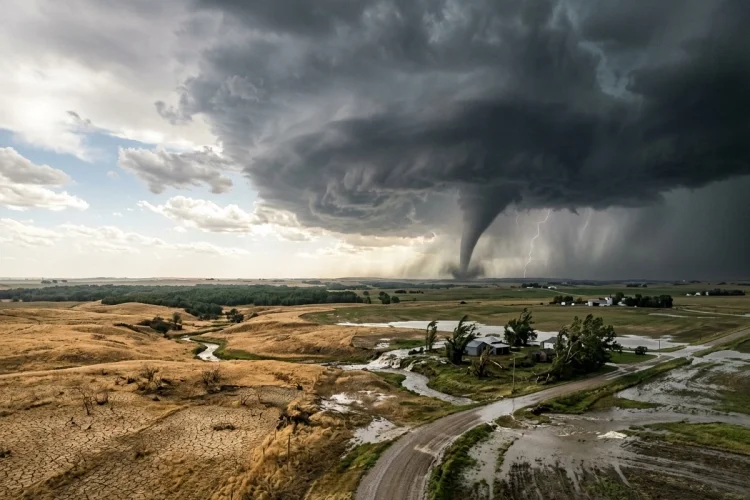
Tornadoes are rapidly rotating columns of air extending from a thunderstorm to the ground. They are relatively narrow, but their winds can cause intense damage within a small area.
Tropical cyclones are large rotating storm systems that develop over warm ocean water. They are called hurricanes, typhoons, or cyclones depending on the region. Their dangers include destructive winds, extreme rainfall, storm surge, flooding, and coastal erosion.
How Does Extreme Weather Develop?
Weather is driven by differences in heat, moisture, and air pressure. The Sun warms Earth unevenly, creating temperature contrasts between the equator and poles, land and ocean, and one season and another.
Warm air generally rises, while cooler air sinks. This movement helps create winds, clouds, rainfall, and larger circulation patterns. When atmospheric ingredients combine in an unusual or powerful way, extreme conditions may form.
A severe thunderstorm, for example, usually requires warm moist air near the surface, cooler air above it, and a mechanism that forces air upward. Strong changes in wind speed or direction with height can help organise the storm and allow it to become more intense.
Heatwaves often develop when a persistent area of high pressure traps warm air over a region. Drought can emerge when rainfall patterns remain disrupted for an extended period, sometimes combined with high temperatures that increase evaporation.
Tropical cyclones require warm ocean water, moisture, atmospheric instability, and relatively low wind shear. However, having the right ingredients does not guarantee that a powerful storm will develop.
Extreme Weather, Severe Weather, and Disasters
The terms “extreme weather,” “severe weather,” and “natural disaster” are related, but they do not mean exactly the same thing.
Extreme weather describes how unusual an event is compared with normal local conditions. Severe weather generally focuses on weather that can threaten life or property, even if similar events occur regularly in that region.
A disaster happens when a hazardous event seriously disrupts a community and exceeds its ability to cope. The weather itself is only one part of this process.
Exposure and vulnerability also matter. A powerful storm crossing an uninhabited area may cause little harm, while a weaker storm can become disastrous when it strikes a crowded city with poor drainage, fragile buildings, or limited emergency services.
The IPCC explains that disaster risk is shaped by the interaction between weather or climate hazards, exposed people and infrastructure, and social vulnerability.
Why Do the Effects Vary Between Places?
Two communities can experience the same storm but suffer very different consequences. Geography, infrastructure, population density, building quality, and emergency preparation all influence the outcome.
A coastal settlement may face storm surge, while an inland community experiences mainly wind and rain. A city covered in concrete may heat up more than nearby rural areas because buildings and roads absorb and release heat.
Local ground conditions also affect flooding. Water runs quickly from paved surfaces, especially where drains are blocked or undersized. Forested and undeveloped land can often absorb more rainfall, although already saturated soil may still produce dangerous runoff.
Social conditions are equally important. Older adults, young children, outdoor workers, people with medical conditions, and households without reliable heating, cooling, transport, or safe housing may face greater risks.
This is why weather forecasts often use impact-based warnings. Rather than reporting only wind speed or rainfall totals, these warnings describe possible consequences such as road closures, power cuts, flooding, or danger to health.
Is Climate Change Causing More Extreme Weather?
Climate change does not affect every type of extreme weather in the same way. It also does not mean that every storm, flood, or heatwave has one single cause.
However, human-caused climate change is already influencing many weather and climate extremes around the world. The IPCC reports clear changes in hot extremes and heavy precipitation, along with regional changes in drought and other hazards.
A warmer atmosphere can increase the likelihood and intensity of heatwaves. Warmer air can also hold more water vapour, creating the potential for heavier rainfall when suitable storm conditions develop.
Warmer oceans can provide more energy and moisture to tropical cyclones. This does not simply mean that every ocean basin will experience more storms, but rainfall rates and the proportion of very intense cyclones may increase as warming continues.
Scientists study individual events through extreme-event attribution. They compare climate simulations with and without human influence to estimate whether climate change made an event more likely or more intense.
Natural patterns such as El Niño, La Niña, volcanic activity, and normal atmospheric variability continue to influence weather. Climate change operates alongside these factors rather than replacing them.
How Forecasts and Early Warnings Reduce Harm
Meteorologists monitor the atmosphere using satellites, radar, weather stations, ocean buoys, aircraft, and computer models. These tools help them detect developing hazards and estimate where conditions may become dangerous.
Forecasts are not perfect because the atmosphere is highly complex. Small differences in temperature, moisture, or wind can affect how a storm develops, particularly several days ahead.
Warnings usually become more specific as an event approaches. People should therefore monitor updates instead of relying on an old forecast or an unofficial social media post.
Preparation depends on the hazard. During extreme heat, staying hydrated, limiting strenuous activity, checking vulnerable people, and using cool indoor spaces can reduce health risks.
Before storms or floods, people may need to secure loose objects, charge communication devices, protect important documents, and understand evacuation routes.
The most useful action is to learn which hazards are common in your area and follow instructions from the official weather and emergency authorities responsible for your location.
Extreme weather is weather that is unusually intense, rare, poorly timed, or widespread for a particular location and season. It includes heatwaves, cold spells, heavy rainfall, floods, droughts, severe storms, tornadoes, tropical cyclones, and major winter weather.
The severity of an event does not depend on weather conditions alone. Geography, infrastructure, exposure, vulnerability, and preparation determine whether unusual weather becomes a major disaster.
Climate change is already influencing several types of extremes, particularly heat and heavy precipitation, but its effect varies by event and region.
Check the official warning services available in your area, create a basic emergency plan, and prepare for local hazards before dangerous weather appears in the forecast.