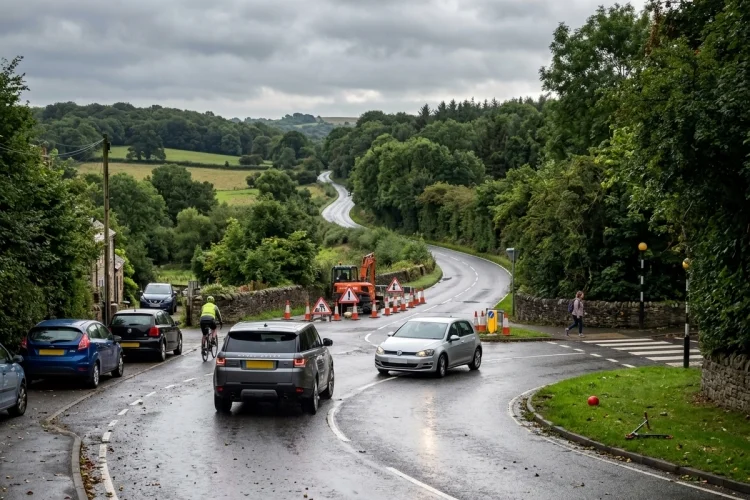
A safe drive can change in seconds. A ball rolls into the road, rain reduces visibility, or the vehicle ahead brakes suddenly because of debris you cannot yet see. Recognising danger early gives you more time to respond calmly instead of making a last-second move.
The most common road hazards are not limited to dramatic events such as collisions or landslides. They include ordinary situations like parked cars, wet surfaces, blind bends, roadworks, tiredness, and pedestrians near crossings.
These conditions become more dangerous when drivers are travelling too fast, following too closely, or looking away from the road.
Road traffic crashes kill around 1.16 million people globally each year, while millions more experience non-fatal injuries. More than half of road deaths involve vulnerable users such as pedestrians, cyclists, and motorcyclists.
This guide explains the hazards drivers should learn to spot, why they matter, and how good observation, positioning, and speed management can reduce risk.
What Is a Road Hazard?
A road hazard is any condition, object, person, animal, or behaviour that could force a driver to change speed or direction to avoid harm. It may be clearly visible, partly hidden, or only suggested by clues in the surrounding environment.
For example, a football beside the road is not blocking your path. However, it suggests that a child may run after it. Similarly, brake lights several vehicles ahead may indicate congestion or an incident before you can see the actual obstruction.
Hazard recognition involves more than looking directly in front of the vehicle. Drivers should scan far ahead, check mirrors regularly, observe side roads, and notice situations that could develop into danger.
The aim is not to react to everything as an emergency. It is to identify changing conditions early enough to create time and space for a controlled response.
Poor Road Surfaces and Unexpected Debris
Potholes, loose gravel, broken road edges, standing water, fallen branches, spilled loads, and damaged drain covers can affect steering, braking, and tyre grip. Smaller hazards may be difficult to see at night or in heavy rain.
Swerving suddenly to avoid a pothole can create a greater danger than the pothole itself. Before changing position, check mirrors and nearby traffic. Reduce speed smoothly when possible rather than making a sharp movement into another lane.
Motorcyclists and cyclists are especially vulnerable to uneven surfaces, oily patches, debris, and drain covers. The Highway Code advises drivers to give them enough space because they may need to change direction suddenly to avoid these hazards.
Pothole impacts can also damage tyres or cause sudden pressure loss. Regularly checking tyre pressure, tread, and sidewalls can improve the vehicle’s ability to cope with poor surfaces.
Rain, Fog, Ice, and Other Weather Hazards
Bad weather can reduce visibility, weaken tyre grip, increase stopping distance, and make other road users harder to predict.
1. Wet Roads and Standing Water
Rain mixes with oil, dirt, and road residue, making the surface slippery. Heavy rain may also hide potholes or lane markings beneath standing water.
In wet conditions, stopping distances can be at least twice those required on a dry road. Drivers should reduce speed, increase the following gap, use smooth steering and braking, and avoid driving through water when its depth is uncertain.
Driving too quickly through standing water can cause aquaplaning, where the tyres lose effective contact with the road. If steering suddenly feels light, ease off the accelerator smoothly and avoid harsh braking or steering.
2. Fog, Darkness, and Low Sun
Fog may hide stationary traffic, junctions, pedestrians, and bends until they are dangerously close. Use the appropriate lights, reduce speed, and make sure you can stop within the distance you can see to be clear.
Low sunlight can be equally blinding, especially when the windscreen is dirty. Keep the glass clean, use the sun visor, and slow down rather than continuing at normal speed with restricted vision.
Blind Bends, Junctions, and Hidden Entrances
A bend becomes hazardous when you cannot see far enough ahead to know whether the road is clear. There may be a stopped vehicle, cyclist, pedestrian, animal, or queue just beyond your view.
Enter bends at a speed that allows you to stop safely within the visible section of road. Braking before the bend is usually safer than braking sharply while turning.
Junctions also create conflict between vehicles travelling in different directions. Watch for indicators, wheel movement, gaps in traffic, and drivers who appear ready to pull out.
Do not assume that another road user has seen you simply because you have priority. Buildings, vegetation, parked vehicles, and large trucks can block sight lines.
Hidden driveways and farm entrances deserve similar caution. Mud on the road, warning signs, or slow-moving equipment may indicate vehicles entering or leaving nearby.
Pedestrians, Cyclists, and Motorcyclists
Vulnerable road users have less physical protection than people inside cars. They can also be difficult to see because of their size, position, or the surrounding traffic.
Pedestrians may step into the road from behind buses, parked vehicles, or roadside stalls. Children can move unpredictably, while older adults or disabled pedestrians may need more time to cross.
Cyclists and motorcyclists may be hidden in blind spots or appear farther away than they really are. Check mirrors and blind spots carefully before turning, changing lanes, or opening a door.
Drivers should provide extra space when passing pedestrians, cyclists, motorcyclists, and horse riders, particularly at night or during bad weather.
Look for environmental clues. Schools, playgrounds, bus stops, pedestrian crossings, cycle lanes, and rows of parked vehicles all suggest that a vulnerable road user may enter your path.
Roadworks and Temporary Traffic Changes
Roadworks can change a familiar route overnight. Lanes may narrow, traffic may merge, speed limits may fall, and temporary barriers may leave little room for error.
Approach work zones early enough to read the signs and move into the correct lane without forcing your way into a small gap. Keep a safe following distance because traffic may stop suddenly.
Workers, construction vehicles, loose materials, temporary markings, and uneven surfaces may all appear within the same area. At night, bright work lights can create glare and make lane boundaries harder to follow.
Temporary speed limits are designed to protect both road users and workers. Speeding is particularly dangerous where lane widths, surface conditions, and traffic patterns have changed.
The Federal Highway Administration emphasises that clear advance warnings and suitable speeds are essential for work-zone safety.
Parked Vehicles and Opening Doors
A line of parked vehicles creates several possible hazards. A door may open, a vehicle may pull away, or a pedestrian may emerge from a gap.
Look through rear windows where possible and watch for occupants, illuminated brake lights, exhaust, indicators, or front wheels turning towards the road. These clues may reveal movement before the vehicle enters your path.
Leave enough space when passing parked cars, especially where cyclists are present. Reducing speed gives you more time if a door opens or a person steps out unexpectedly.
Large vehicles can hide children and other pedestrians completely. Treat gaps between parked buses, vans, and trucks as potential crossing points, even when there is no marked pedestrian crossing.
Large Vehicles, Slow Traffic, and Blind Spots
Trucks and buses have larger blind spots, require more space to turn, and usually take longer to stop than smaller vehicles. Driving beside them for an extended period can leave you invisible to the driver.
Avoid cutting closely in front of a heavy vehicle after overtaking. Make sure you can see the entire vehicle in your mirror before returning to its lane.
At junctions, large vehicles may move in the opposite direction briefly before completing a turn. Give them room rather than trying to pass through the space beside them.
Slow traffic creates different hazards. Drivers may change lanes abruptly, motorcycles may filter between vehicles, and pedestrians may cross between stationary cars. Continue checking mirrors and surrounding traffic even when your vehicle is barely moving.
Distraction, Fatigue, and Excessive Speed
Sometimes the greatest road hazard is the driver’s own condition. Mobile phones, navigation systems, passengers, food, stress, and daydreaming can take attention away from developing dangers.
Distraction may be visual, manual, or mental. A driver does not need to hold a phone to become distracted; concentrating on a conversation or adjusting a screen can also delay hazard recognition.
Fatigue reduces concentration and reaction ability. Warning signs include frequent yawning, wandering across lane markings, missing signs, and struggling to remember the previous few kilometres.
Stop somewhere safe when drowsiness appears. Opening a window or increasing the music volume does not replace sleep. NHTSA identifies adequate rest as the most reliable protection against drowsy driving.
Speed makes almost every hazard harder to manage. It reduces the time available to react and increases the force of a collision. A legal speed limit is a maximum, not a target, and drivers should travel more slowly when weather, visibility, road condition, or traffic requires it.
How to Improve Road Hazard Awareness
Effective hazard awareness begins with active observation. Scan well ahead rather than focusing only on the vehicle directly in front of you.
Keep a safe following distance so that your view is not blocked and you have room to brake. The Highway Code recommends at least a two-second gap in normal conditions, with a larger distance when roads are wet or visibility is poor.
Check mirrors before slowing, turning, or changing position. Avoid remaining unnecessarily in another vehicle’s blind spot, and communicate clearly with indicators.
Finally, expect other people to make mistakes. Defensive driving does not mean assuming everyone is careless. It means leaving enough space and time so that another person’s unexpected action does not automatically become a collision.
The most common road hazards include poor surfaces, debris, adverse weather, hidden junctions, roadworks, parked vehicles, large trucks, vulnerable road users, distraction, fatigue, and unsuitable speed.
Good drivers do not simply react quickly. They observe early, recognise warning signs, reduce speed before danger develops, and maintain enough space to respond smoothly.
Vehicle maintenance, clear windscreens, healthy tyres, and proper rest also improve your ability to manage unexpected conditions.
On your next journey, practise scanning farther ahead and identifying potential hazards before reaching them. Treat every bend, junction, parked vehicle, and change in weather as a reason to reassess your speed, position, and following distance.